
Weather Window: Cloud Identification and Weather Prediction Activity Kit
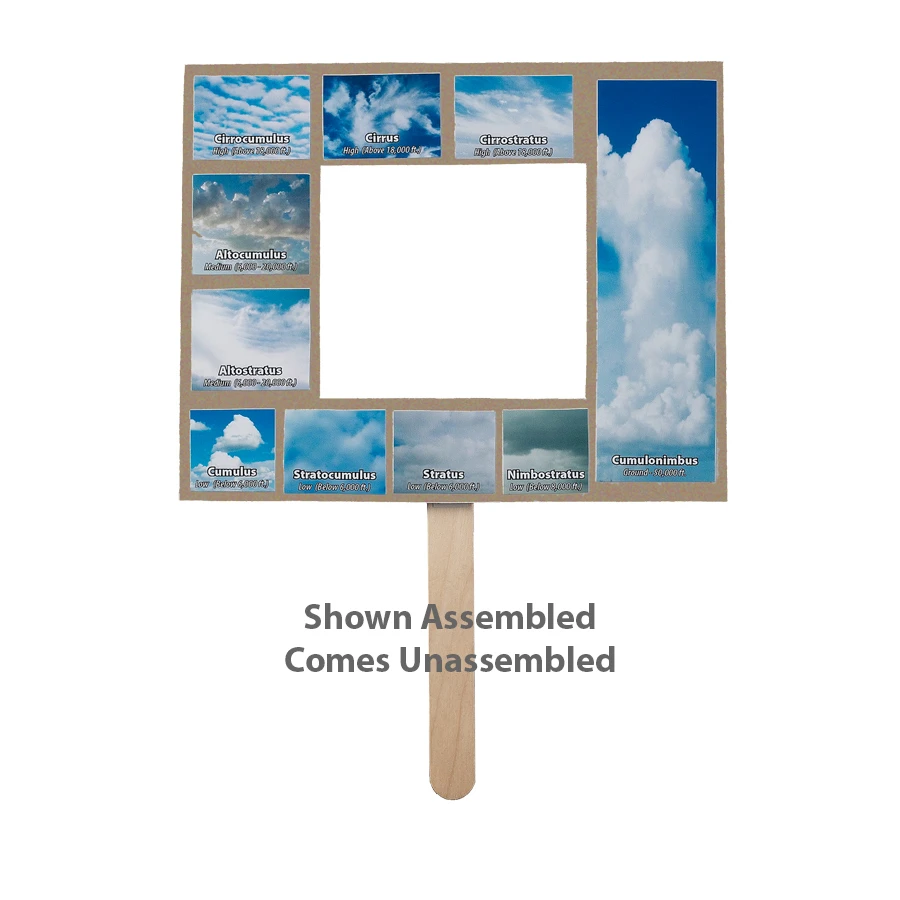
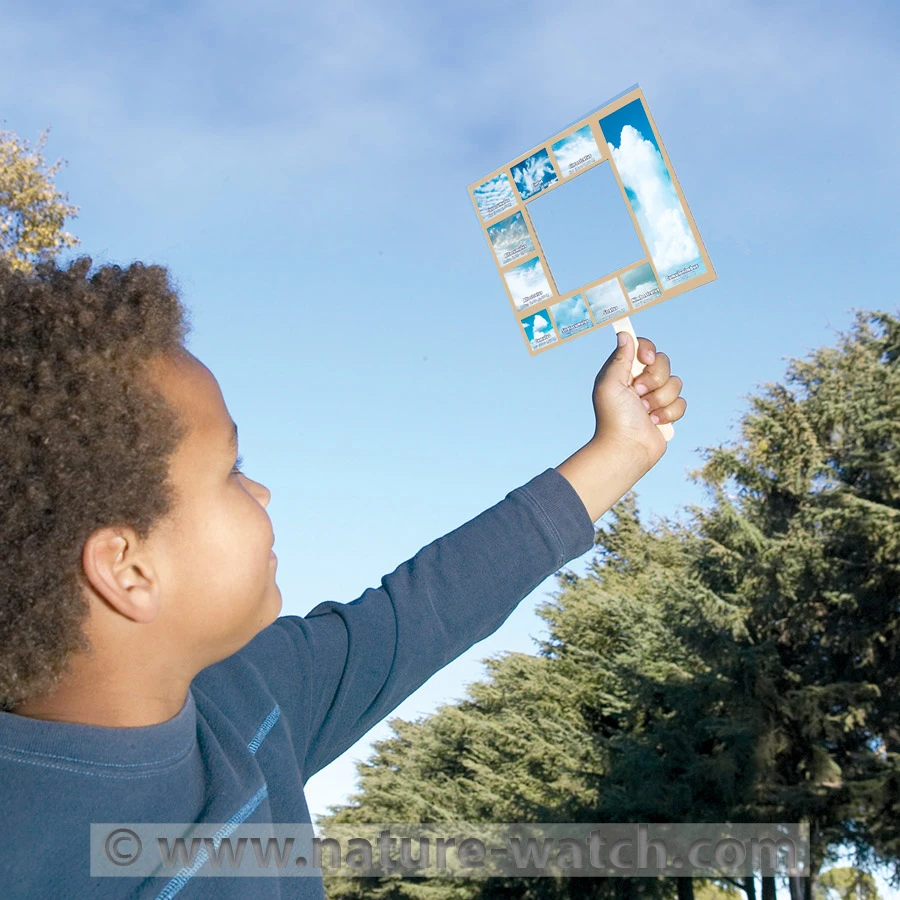


Here's a great way to teach about cloud identification and classification! Each child makes their own Nature-Watch Weather Window - a hand-held frame with a variety of cloud types classified by altitude. Kit includes cardboard frames and cloud pictures. Participants will cut out each picture and glue them onto their very own Weather Window! Then, head outside and match real clouds to the photos. Identify the cloud type and discuss what type of weather might follow as a result.
Our exclusive activity guide provides all of the information needed to teach about cloud identification - even if the instructor has no previous knowledge on this subject. Ages 4 and up. Everything you need is provided!
Please note: this kit requires a considerable amount of cutting. Recommended for ages 6 and up depending on their cutting skills. There is assembly required. You will need to cut out each individual cloud picture and glue each one on to the provided cardboard frame.

Unit Goals and Concepts:
- Discover clouds and weather in an exciting way.
- Classify types of clouds and learn the weather they bring.
- Make a Weather Window that can be used to identify clouds and predict weather.
Materials Included:
- All the materials you'll need to make your Weather Windows.
- Our exclusive instructor's activity guide that makes planning the project easy and delivers loads of fun ideas for activities, games and relevant projects.
$8.49