Starry, Starry Day Constellation Keychain Activity Kit

Not for children under 3 years.
- Craft a keychain constellation viewer!
- Includes all materials and instructions
- Learn about constellations and their stories
- Encourages curiosity about space & history
- Includes 60-minute step-by-step video lesson

Over the years, Nature-Watch has found many creative ways to help instructors teach children about nature... and this one is no exception! How do you educate children about constellations during daylight hours? Here's how!
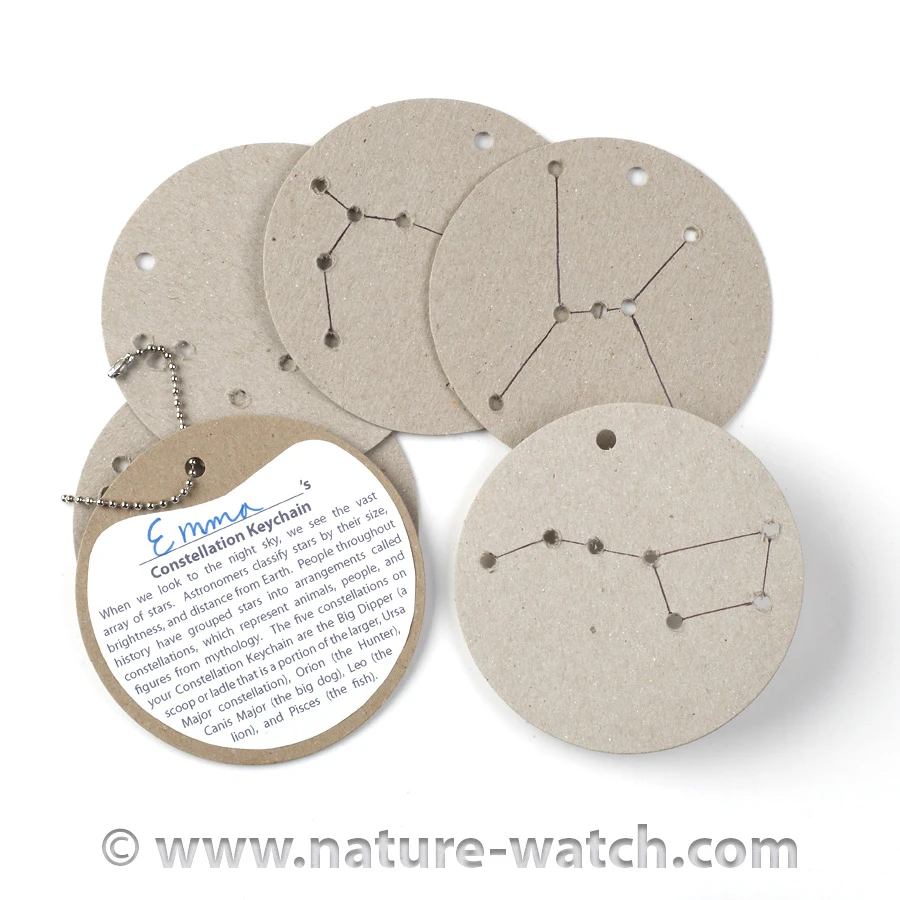
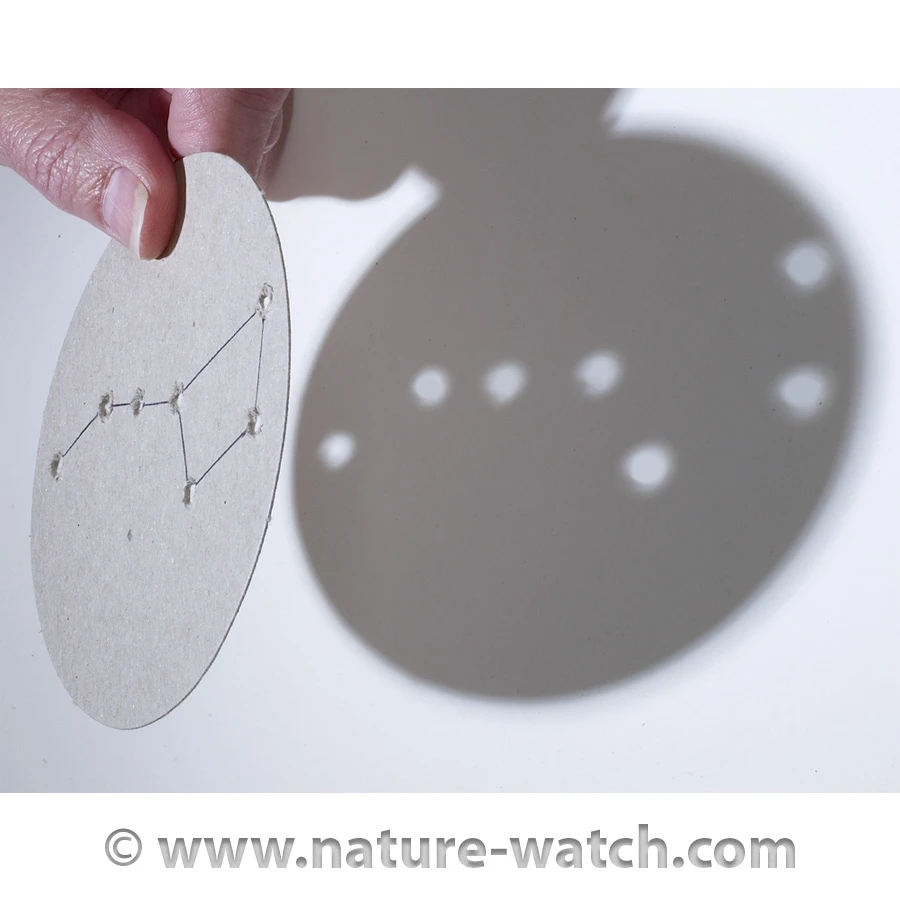
We have created and professionally die-cut cardboard medallions with holes to represent each individual star in a constellation. When light shines through the medallion, the image of the constellation appears. This can be done indoors using a single bulb flashlight to make the constellation visible on the wall or ceiling, or can be done outdoors on a bright sunny day to see the constellation on the ground.
Constellations included are: Ursa Major (Big Dipper), Orion (the hunter), Leo (Lion), Pisces (fish), Canis Major (dog).

Unit Goals and Concepts:
- "See" the stars during the day.
- Understand the role that stars and other celestial bodies play in our universe.
- Discover the mythical stories behind the constellations.
Materials Included:
- All the materials you'll need for each participant to create their own Constellation Medallion Keychain.
- Our Nature-Watch Activity Guide that provides everything instructors need to teach about constellations.
- The only materials you supply are pencils or markers and scissors.