
Dino Tooth Activity Kit (Discontinued)


WARNING: Choking Hazard
Not for children under 3 years.
Not for children under 3 years.
ITEM #135
Did you know that some dinosaurs had as many as 900 teeth?! Or that a dinosaur tooth fossil was found measuring more than a foot long! Tooth fossils provide scientists with a great deal of information about how dinosaurs lived, what they ate, their size and even their behavior.
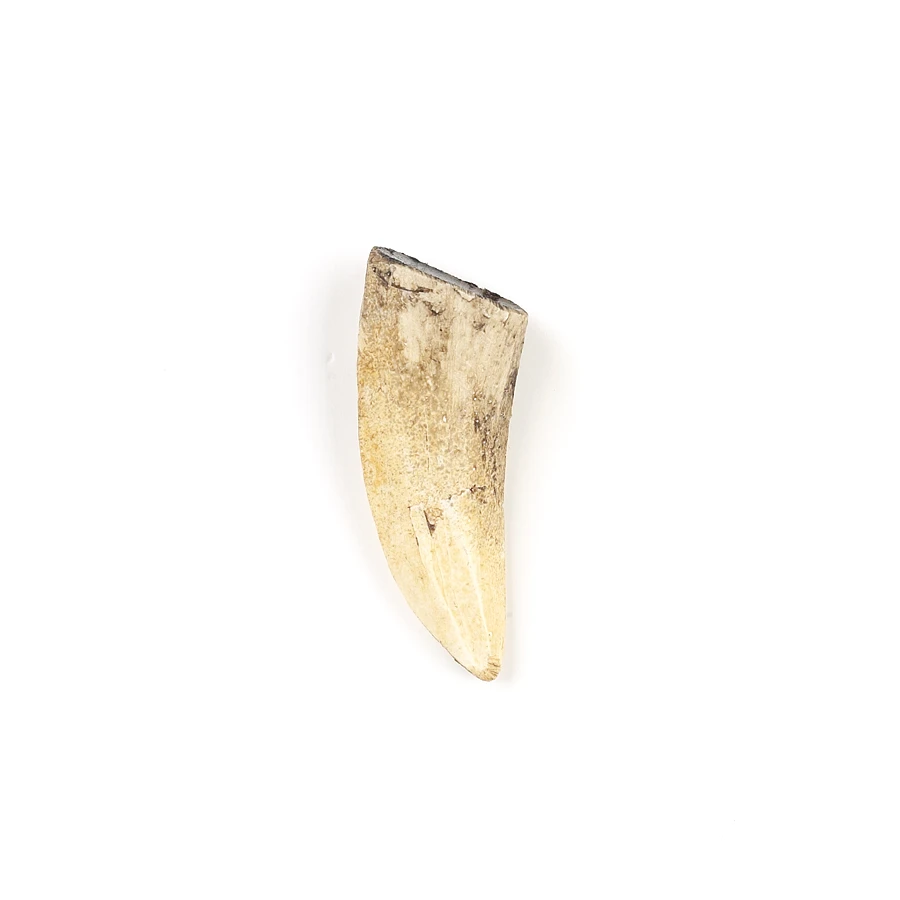
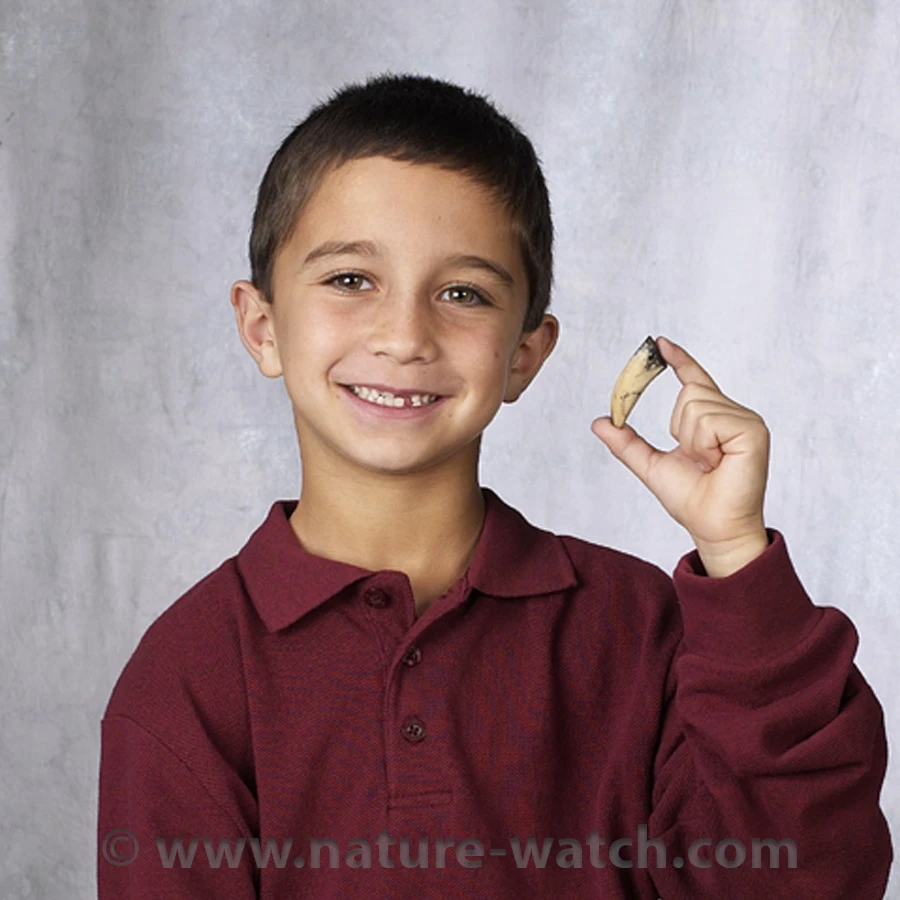
Kids won't believe it when you hand each of them a Tyrannosaurus Tooth replica of their very own. Paint or color the tooth, attach the included adhesive magnet on the back and they've made a prehistoric souvenir to reinforce their learning (and to stick on their refrigerator at home!) This kit is packed full of dinosaur learning and fun!
Ages 4 and up.
Unit Goals and Concepts:
- Introduce participants to dinosaurs of all varieties - large and small.
- Compare and contrast herbivore and carnivore dinosaurs and learn what made them different.
- Share information about dinosaur teeth and eating habits.
- Paint or color a T-Rex tooth replica magnet.
Materials Included:
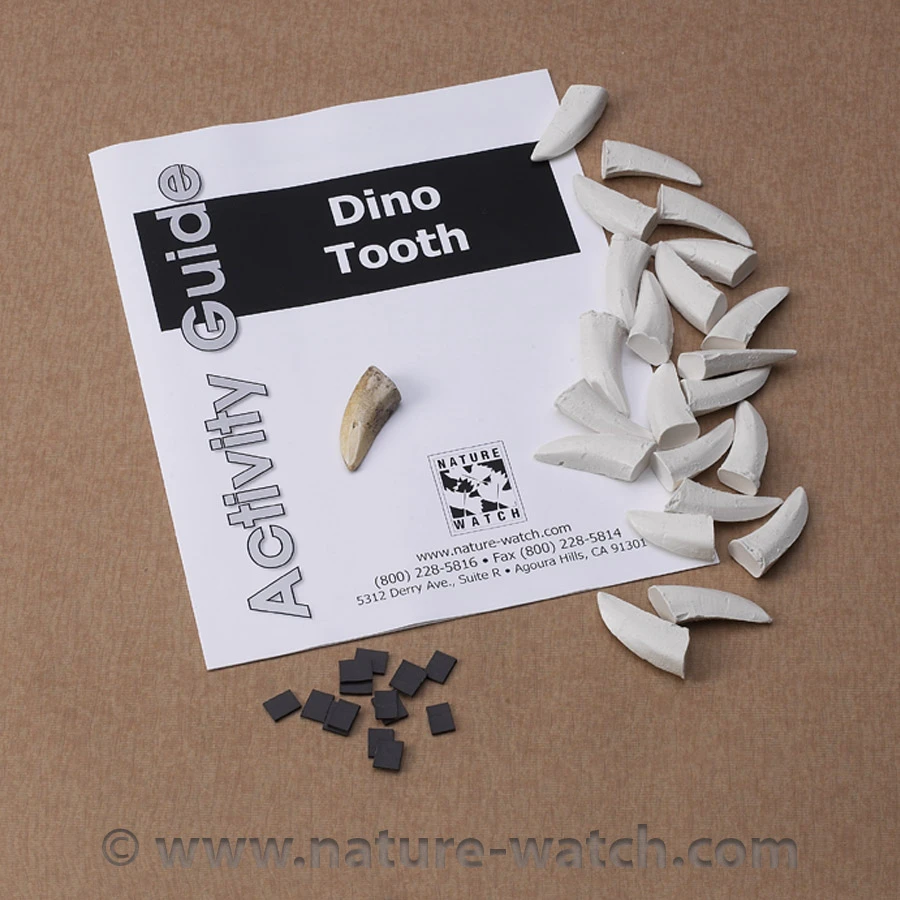
- A T-Rex tooth replica for each participant.
- Magnets to stick on the back of the tooth so it can be displayed on any magnetic surface.
- Baggies for participants to take their project home in.
- Our exclusive instructor's activity guide, which provides instructors with everything they need to teach about dinosaurs and includes suggestions for additional activities and a reproducible activity sheet.
- The only materials you supply are paint or markers.
Companion Book:

You May Also be Interested In...
Item #301k
$16.00
Item #x137z
$9.89
Item #804a
$22.00
Item #819f
$60.00