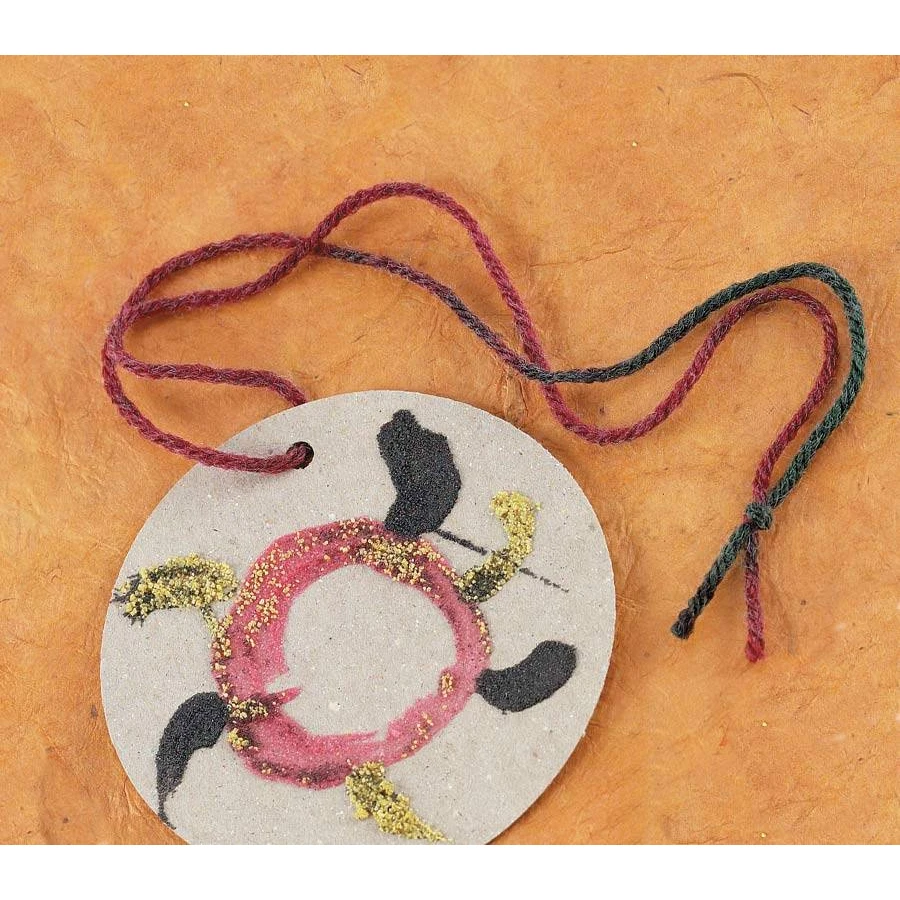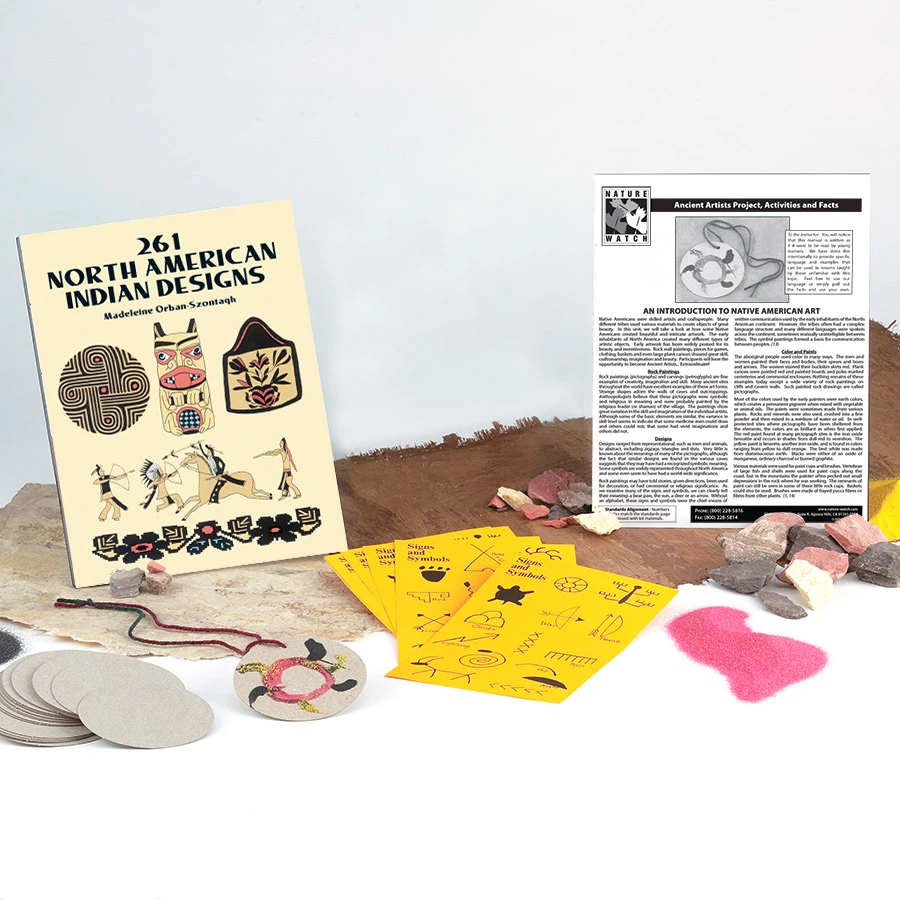
Communication comes in many forms. The most effective form in past civilizations occurred through pictures. Our exclusive Ancient Artists Activity Kit introduces kids to early Native American cultures and even teaches them to decipher the communications of long gone civilizations. Every child will make and take home a sand painted medallion using real Native American materials and paint with actual paint rock chunks taken from a quarry.
Ages 4 and up.
Unit Goals and Concepts:
- Show how communication can occur through pictures.
- Introduce the art of past cultures.
- Use materials similar to those used by Native Americans.
- Create works of art, using natural materials and designs.
Materials Included:
- 3" medallions and red, yellow, and black colored sand for making "sand painted" medallions.
- Actual paint rocks that can be used to make natural paint, just like the Native Americans used.
- Signs and Symbols Sheets plus a resource book that can be used for design ideas and background information.
- Our exclusive instructor's activity guide that makes planning this activity easy and delivers loads of fun ideas for activities, games and relevant projects.
- The only materials you supply are glue, brushes, yarn and scissors.
For groups larger than 25, simply order extra medallions, colored sand, and paint rocks (see "Accessories" below).
General: Standards in History
Content Standard 2B: Students understand how communities in North America varied long ago. (K-4)
Compare and contrast the different ways in which early Native American peoples adapted to their various environments and created their patterns of community life long ago.
Content Standard 3A: Students understand the history of indigenous peoples who first lived in his or her state or region (K-4)
Draw upon data in paintings and artifacts to hypothesize about the culture of the early Native Americans who are known to have lived in the state.
Draw upon legends and myths of the Native Americans who lived in students’ state or region in order to describe personal accounts of their history.
Content Standard 6A: Students understand folklore and other cultural contributions from various regions of the United States and how they help to form a national heritage.(K-4)
Examine art, crafts, music, and language of people from a variety of regions long ago and describe their influence on the nation.
Describe regional folk heroes, stories, or songs that have contributed to the development of the cultural history of the U.S.
Draw upon a variety of stories, legends, songs, ballads, games, and tall tales in order to describe the environment, lifestyles, beliefs, and struggles of people in various regions of the country.
Content Standard 7A: Students understand the cultures and historical developments of selected societies. (K-4)
Analyze the dance, music, and arts of various cultures around the world to draw conclusions about the history, daily life, and beliefs of the people in history.
Specific (California standards):
(K.2b Science) Students know that stories sometimes give plants and animals attributes they do not really have.
(SS 1.5 #3) Compare the beliefs, customs, ceremonies, traditions, and social practices of the varied cultures, drawing from folklore.
(SS 3.2 #1) Describe national identities, religious beliefs, customs, and various folklore traditions.
(SS 3.2 #2)Discuss the ways in which physical geography, including climate, influenced how the local Indian nations adapted to their natural environment.
(SS 5.1 #2) Describe their (Native Americans) varied customs and folklore traditions.