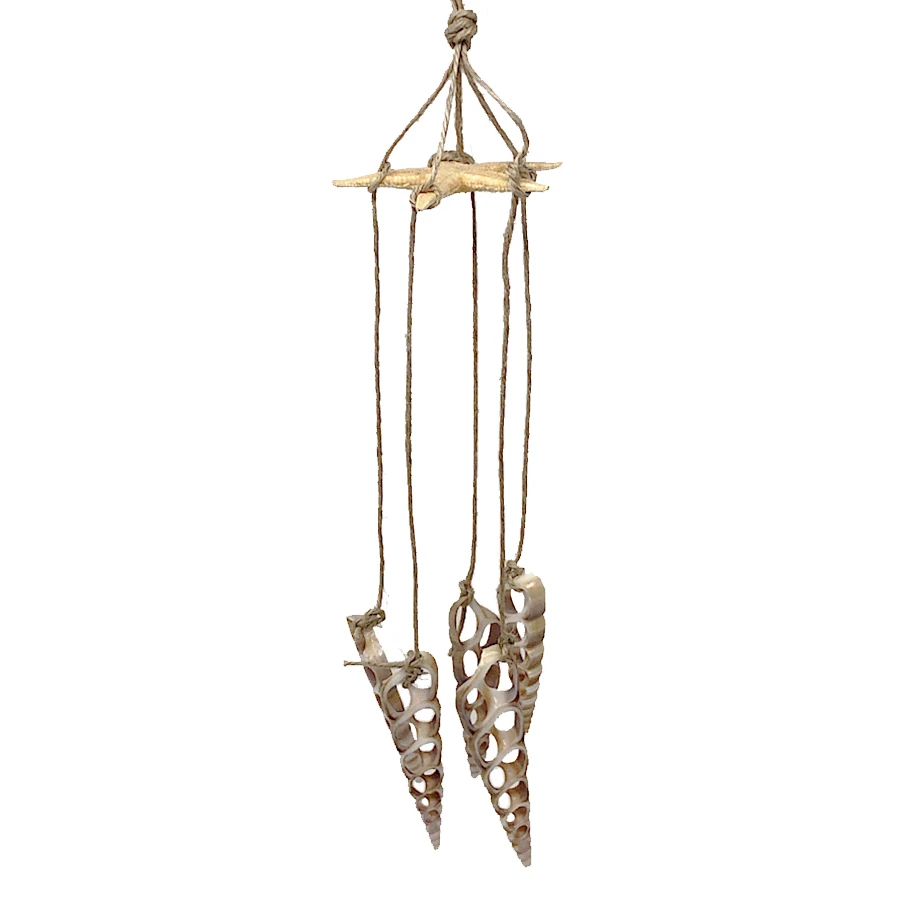
This activity kit combines wonderful information about ocean life with a beautiful craft project made of natural materials. Children (and adults!) are fascinated by sea life and they will love to create and take their very own tide pool wind chime. Each participant gets a small sea star and 5 sea urchin spines. Dip the cord into glue and then into the hole atop each urchin spine. Tie on to each leg of the sea star and there you have it... an all natural wind chime that looks and sounds great.
Ages 8 and up.
Unit Goals and Concepts:
- Discover the different areas of a tide pool, what animals and plants live in each, and why.
- Learn interesting facts about different tide pool specific species.
- Gain a further understanding of the tide pool and its organisms by creating a tide pool wind chime using a starfish and sea urchin spines.
Materials Included:
- Starfish, sea urchin spines, glue and other supplies for each participant to make a tide pool wind chime.
- Baggies for each participant to take his or her project home in.
- Our exclusive instructor's activity guide that provides everything the instructor needs to teach about tide pools, including a reproducible activity sheet and ideas for additional projects.
General: National Science Education Standard NS.K-4.3, NS.5-8.3 and NS.5-8.4 Life Science and Earth and Space Science.
Content Standard C: Life Cycles of Organisms (K-4)
Many characteristics of an organism are inherited from the parents of the organism (shell style), but other characteristics result from an individual’s interactions with the environment (how the shell is actually formed).
Organisms and their Environments (K-4)
An organism’s patterns of behavior are related to the nature of that organism's environment.
Reproduction and Heredity (5-8)
The characteristics of an organism can be described in terms of a combination of traits. Some traits are inherited and others result from interactions with the environment.
Content Standard D: Earth in the Solar System (5-8)
Gravity is the force that keeps planets in orbit around the sun and governs the rest of the motion in the solar system. Gravity alone holds us to the earth’s surface and explains the phenomena of the tides.
Specific (California standards):
(1.2a) Students know different plants and animals inhabit different kinds of environments and have external features that help them thrive in different kinds of places.
(2.2c) Students know many characteristics of an organism are inherited from the parents. Some characteristics are caused or influenced by the environment.
(2.2d) Students know there is variation among individuals of one kind within a population.
(3.3a) Students know plants and animals have structures that serve different functions in growth, survival, and reproduction.
(3.3b) Students know examples of diverse life forms in different environments such as oceans, deserts, tundra, forests, grasslands, and wetlands.
(4.3a) Students know ecosystems can be characterized by their living and nonliving components.