Rainbow-Scope Color Spectrum Activity Kit


Not for children under 3 years.
- Build a real spectroscope!
- Includes all materials and instructions
- Learn about rainbows and the visible light spectrum
- Encourages curiosity about science & nature
- Includes 60-minute step-by-step video lesson

Children love rainbows! Younger children enjoy seeing the array of color and learning the order of the color spectrum while older children are fascinated to learn more about the physics of light and color.
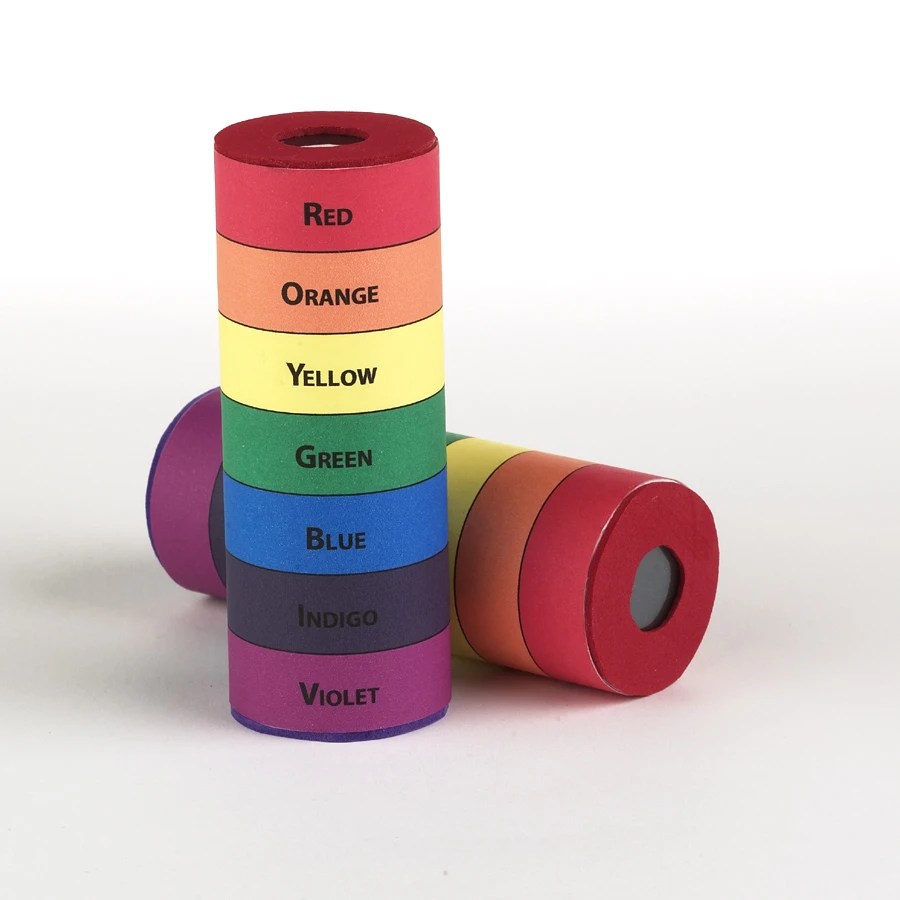
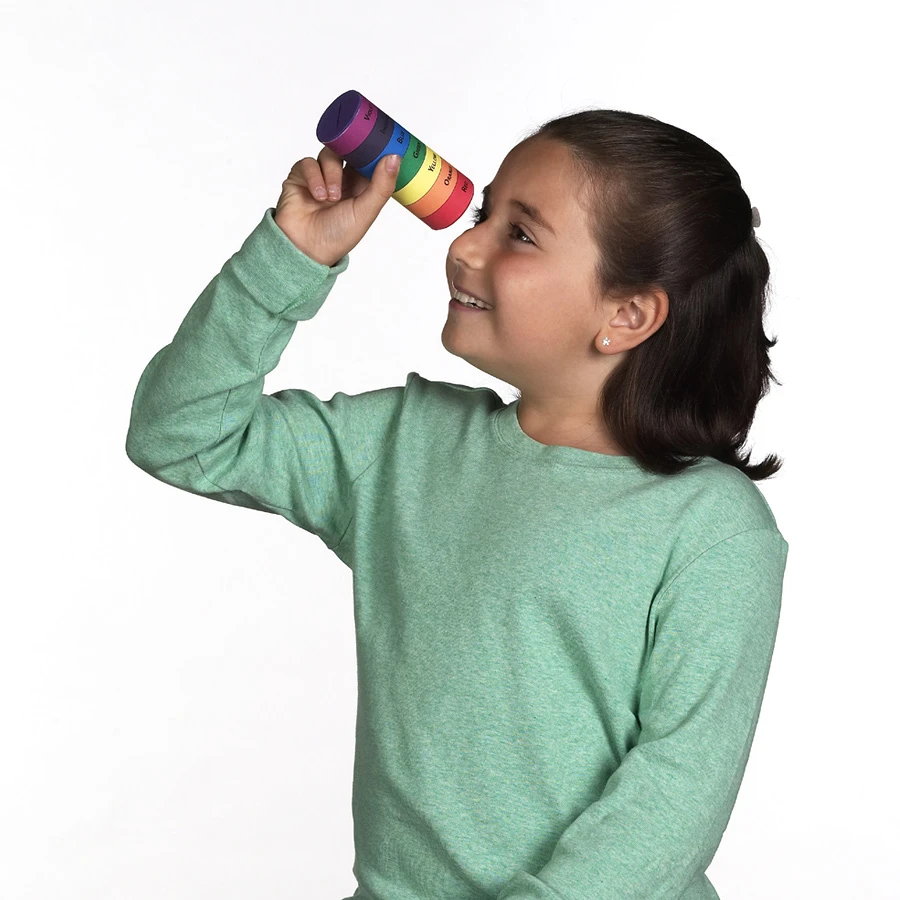
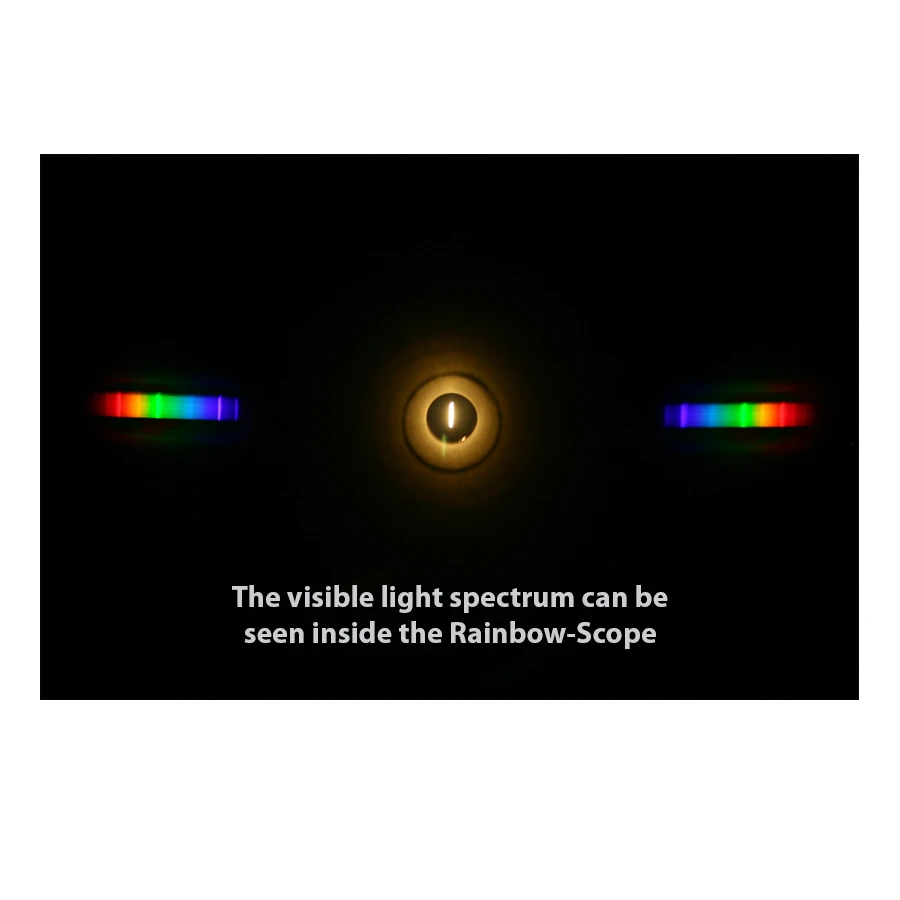
Our Rainbow-Scope Activity Kit allows children to make a spectroscope of their very own and includes everything you need. First, place one piece of the diffraction grating over one end of the tube. Then glue the custom die-cut foam pieces to each end. Look through the scope at any light source and see light separated into its component colors (also known as a rainbow!) Color the outside appropriately and there you have it, a rainbow-colored, Rainbow-scope! Older kids can view a variety of different light sources and compare and contrast the various color bands that are emitted.
For use in grades TK-8 under adult supervision. Ages 8+ for other uses.
Unit Goals and Concepts:
- Introduce the important concepts of color and light to your participants.
- Understand why and how we can see color.
- Experiment with light using a prism.
- Create a Rainbow-Scope that will allow children to see "the rainbow."
Materials Included:
- Materials for each participant to make a Rainbow-Scope -- Our custom-made Rainbow-Scope tubes, die-cut foam ends, diffraction film, and a card to color and wrap around a Rainbow-Scope for decoration.
- Tacky glue.
- A prism (Item x145h).
- Our exclusive instructor's activity guide that provides instructors with everything they need to teach about light, color, and rainbows, plus a reproducible worksheet for your participants.