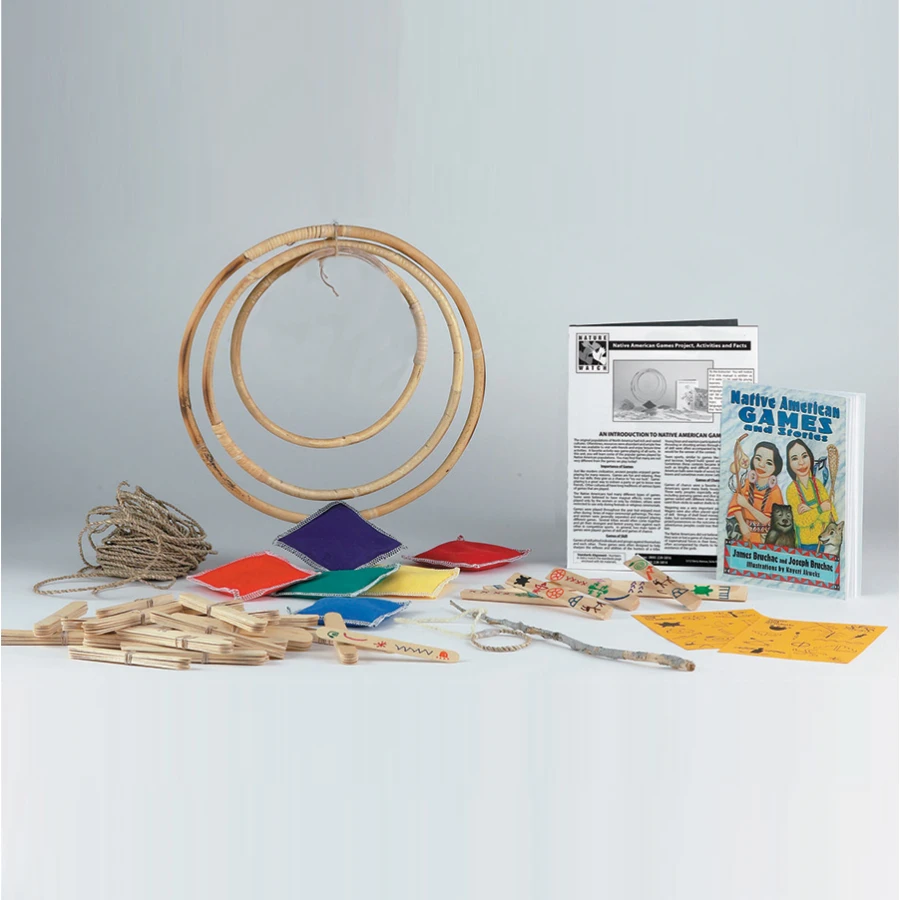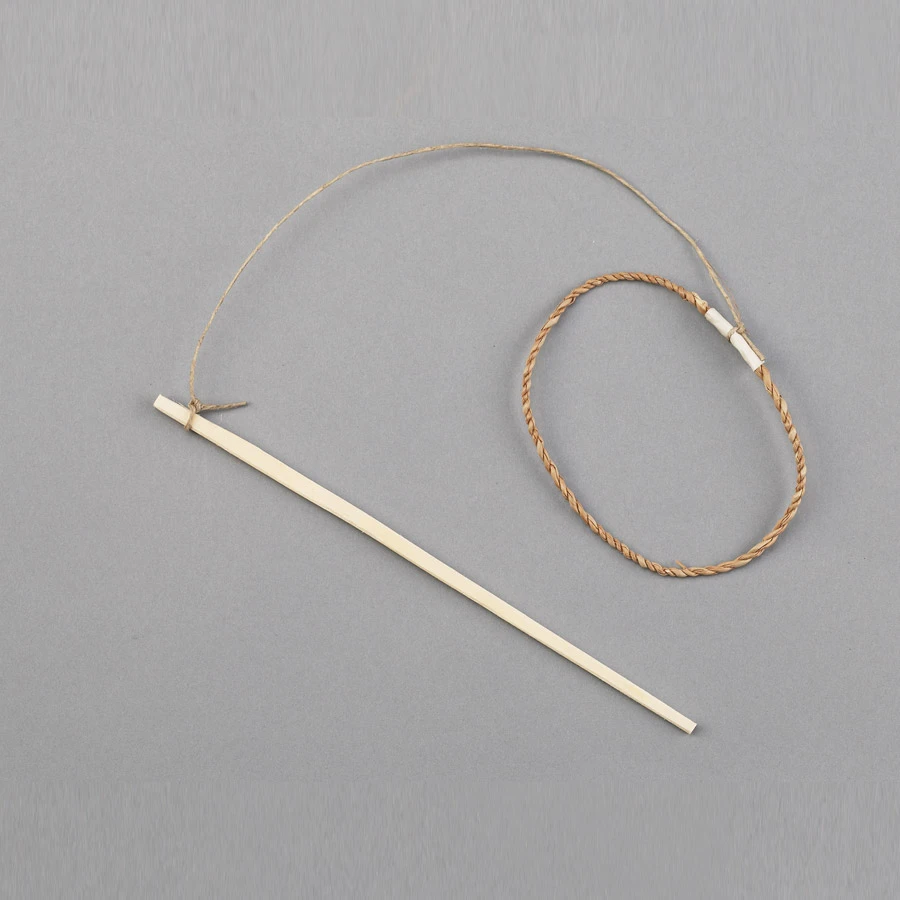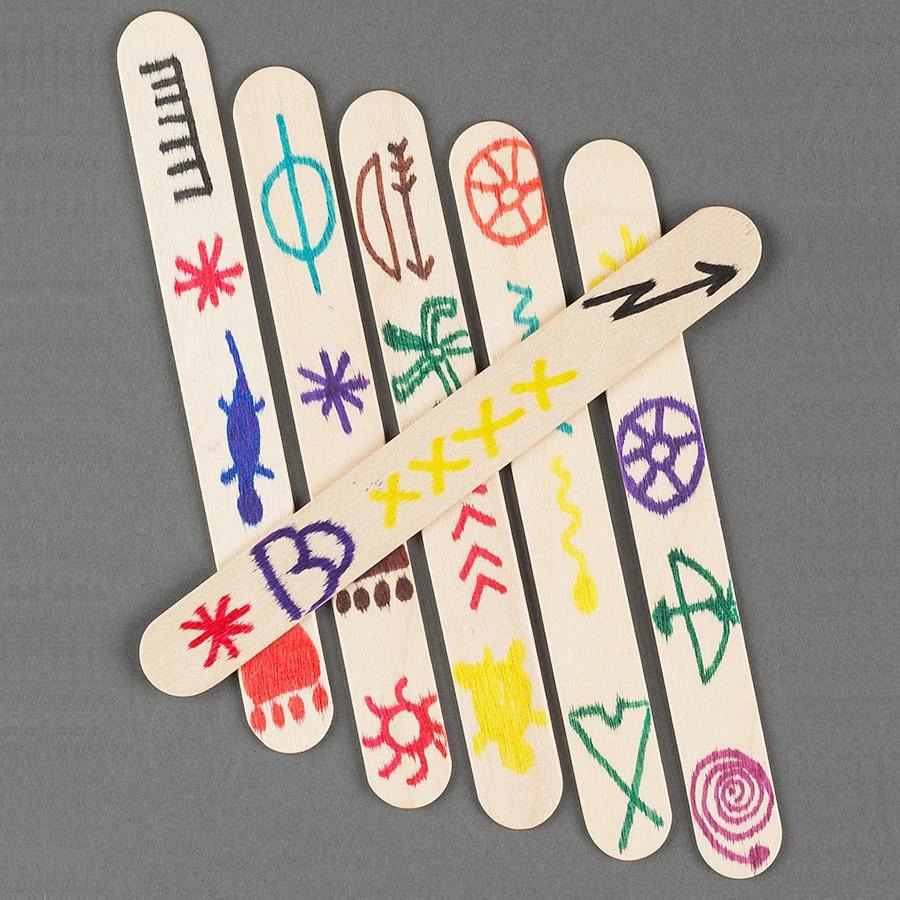
Some of the most imaginative games ever devised were created thousands of years ago by various Native American cultures. Teach kids these clever games of skill and chance with our exclusive Native American Games Activity Kit and you'll be linking them to civilizations of the past. Kids will be introduced to aspects of Native American culture while increasing their physical skills and hand-eye coordination playing the games.
Ages 8 and up.
Unit Goals and Concepts:
- Introduce participants to aspects of Native American cultures.
- Draw similarities between modern culture and native culture.
- Increase physical and hand-eye coordination with games of skill.
- Teach Native American games of both skill and chance.
Materials Included:
- Materials for each participant to make his or her own stick and ring game and stick dice set, each a Native American favorite.
- Rings and bean bags for playing fun games, just like the Native Americans did.
- Our exclusive instructor's activity guide that makes planning the project easy and delivers loads of fun ideas for Native American activities, games and relevant projects.
- A book about Native American games.
- The only materials you supply are markers, yarn and scissors.
For groups larger than 25, simply add extra stick dice sets and sea grass on to your order (see below).
General: Standards in History
Content Standard 1A: Students understand family life in various places long ago. (K-4)
Compare and contrast family life now with family life over time and between various cultures.
Content Standard 1B: Students understand the different ways people of diverse racial, religious, and ethnic groups, and of various national origins have transmitted their beliefs and values. (K-4)
Explain the ways that families long ago expressed and transmitted their beliefs and values through oral traditions, literature, songs, art, religion, community celebrations, mementos, food, and language.
Content Standard 2B: Students understand how communities in varied long ago. (K-4)
Compare and contrast the different ways in which early Native American peoples adapted to their various environments and created their patterns of community life long ago.
Content Standard 6A: Students understand folklore and other cultural contributions from various regions of the United States and how they help to form a national heritage.(K-4)
Draw upon a variety of stories, legends, songs, ballads, games, and tall tales in order to describe the environment, lifestyles, beliefs, and struggles of people in various regions of the country.
Examine art, crafts, music, and language of people from a variety of regions long ago and describe their influence on the nation.
Content Standard 7A: Students understand the cultures and historical developments of selected societies. (K-4)
Analyze the dance, music, and arts of various cultures around the world to draw conclusions about the history, daily life, and beliefs of the people in history.
Specific (California standards):
(SS Analysis Skills) Students explain how the present is connected to the past, identifying both similarities and differences between the two, and how some things change over time and some things stay the same.
(SS Analysis Skills) Students pose relevant questions about events they encounter in historical documents, eyewitness accounts, oral histories, letters, diaries, artifacts, photographs, maps, artworks, and architecture.
(SS K.6 #3) Understand how people lived in earlier times and how their lives would be different today.
(SS 1.4 #3) Recognize similarities and differences of earlier generations in such areas as work, dress, manners, stories, games, and festivals.
(SS 3.2 #1) Describe national identities, religious beliefs, customs, and various folklore traditions.
(SS 5.1 #2) Describe their (Native Americans) varied customs and folklore traditions.