
Froggy Face Mask Activity Kit For Frog Learning
WARNING: Choking Hazard
Not for children under 3 years.
Not for children under 3 years.
ITEM #123
View Afterschool STEM Kits
- Create a frog face mask!
- Includes all materials and instructions
- Learn about frogs through crafts and games
- Encourages curiosity about science & animals
- Includes 60-minute step-by-step video lesson

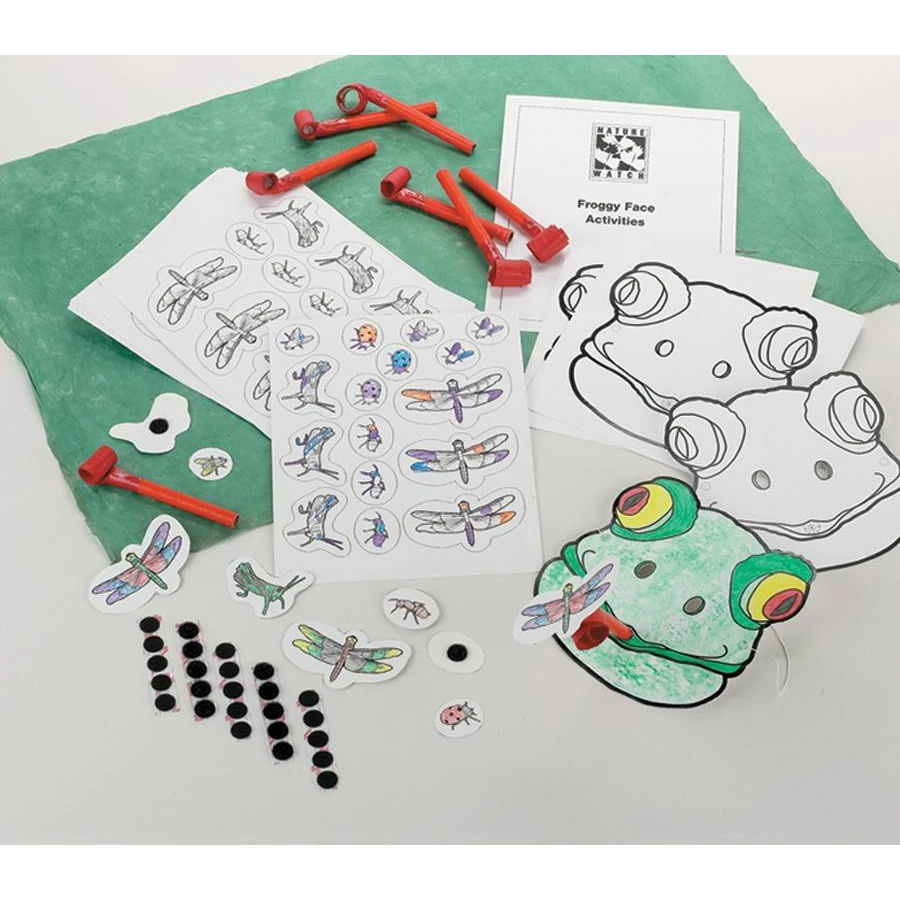
Frogs are really amazing animals! They can lay about 2,000 eggs at one time. They don't drink - instead they absorb water through their skin. They undergo an amazing transformation throughout their lives. Kids love to learn about frogs! Our Froggy Face Activity Kit features custom designed frog masks that kids get to color, party blowers that act as froggy tongues and cut out sheets with loads of bugs. This is a great activity that works because it involves its participants so completely.
For use in grades TK-8 under adult supervision. Ages 8+ for other uses.
Unit Goals and Concepts:
- Discover the reasons why these cold-blooded amphibians are so interesting.
- Create a froggy face mask - then play games, like trying to catch a "bug" (with Velcro) using another Velcro piece on the end of the frog's "tongue."
- Understand why the frog population is being threatened.
- Discuss the life cycle of the frog - its metamorphosis from a tadpole to an adult frog.
Materials Included:
- Blank frog masks, blowers, Velcro and printed "bugs" to make your own complete Froggy Face mask.
- Our exclusive instructor's activity guide with detailed project instructions, background information on frogs, game and loads of ideas for related activities. There's also a reproducible page with frog jokes and fun frog facts.
- The only materials you supply are scissors and crayons or markers.
You May Also be Interested In...
Item #509f
$59.95
Item #409h
$11.47
Item #408c
$12.09
Item #646f
$7.95