
Flower Bookmark Making Activity Kit
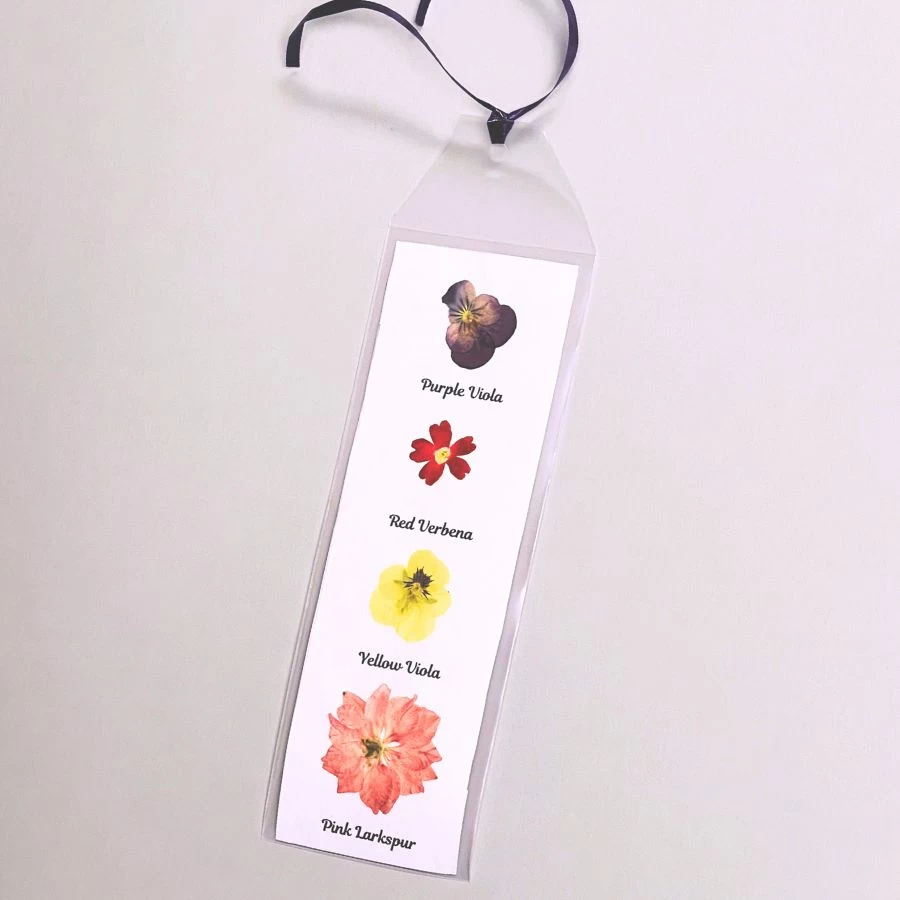
ITEM #127
View Afterschool STEM Kits
- Create a bookmark from real flowers!
- Includes all materials and instructions
- Learn how flowers grow and reproduce
- Encourages curiosity about science & nature
- Includes 60-minute step-by-step video lesson

We can't think of a better way to learn about various families of flowers than to have kids use one of each to create their own bookmark!
Unit Goals and Concepts:
- Develop a general understanding of plant and flower classification.
- Showcase 4 beautiful pressed flowers in a hands-on project - the flower bookmark.
- Present information on the basic parts of a flower.
Materials Included:
- 4 pressed flowers for each bookmark - yellow viola, red verbena, purple viola, and pink larkspur.
- Vinyl bookmark sleeves, ribbon, and card insert to complete the bookmark.
- Our exclusive instructor's activity guide that details the project, while a reproducible page offers a visual representation of the different flowers, some fun facts and more. Loads of instructor activity ideas are included as well
For use in grades TK-8 under adult supervision. Ages 8+ for other uses.
You May Also be Interested In...
Item #139
$53.75-215.00
Item #422u
$14.99
Item #404p
$39.99
Item #158
$64.95-259.80
Item #634k
$9.95